We often guess, hypothesise and act without checking - driven by pace of change and pressure to "have an action plan." It skips listening, reflecting, and sense-checking before acting. After years on various boards, I noticed the pattern: relief at agreeing an action, only to realise later the rush to be seen "doing something" hadn't actually addressed the problem.
Henley Business School challenged this. On day one of my Masters in Coaching and Behavioural Change, Dr. Rebecca Jones told us we'd each conduct our own pioneering research. I chose psychological safety -it taught me exactly how leaders misfire.
70% of leaders overestimate how safe colleagues feel to speak up - to challenge the status quo, ask awkward questions, or discuss mistakes openly. The result: pulled punches, groupthink, weaker decisions, suppressed creativity, and a slow erosion of morale.
Leadership teams misfire when they discuss business-critical dynamics - like engagement - without real insight from colleagues. They see some survey data, sense something's off, and design a fix in a vacuum, without the people who gave that feedback in the room.
For my dissertation, I reviewed sixty years of psychological safety research and ran qualitative interviews to build a diagnostic tool measuring team dynamics around connection and performance - a confidential, anonymous survey colleagues complete in under three minutes.
The real insight comes from combining that data with colleagues' lived experience. That's what reveals the why. Clients across elite sports, consumer goods, professional services, charities, construction, nuclear power and creative agencies tell me the same thing: "We've had conversations we've never had before." The data is the catalyst - not the answer.
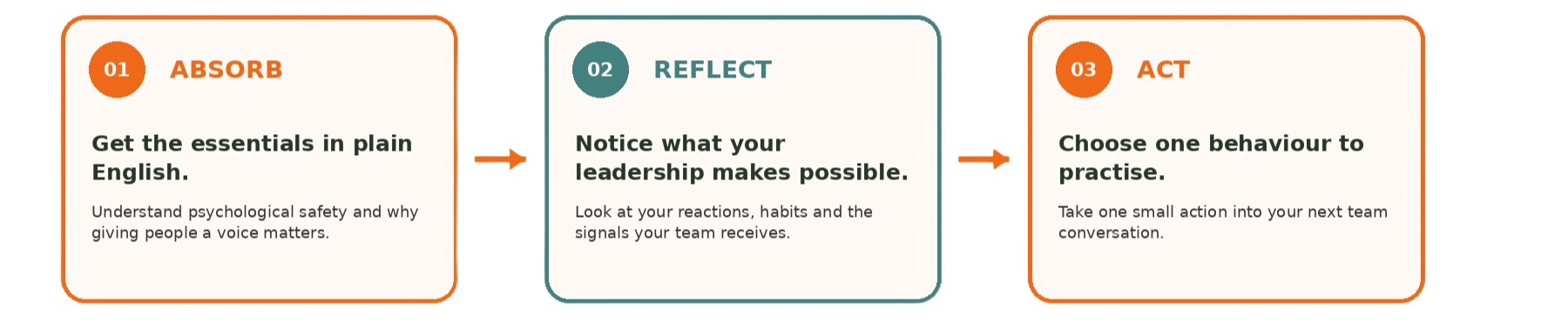
Forced change without real insight is wasted effort. Reflecting on why the scores look the way they do, discussing what behaviour change people actually want, and committing to it together — that's what drives real adoption. People don't just want the action. They want to know why.
Don't guess and misfire. Measure, then talk. Spend less time hypothesising, more time empowering your team to drive the change they believe in.